The Hawks’ Mandate: “Israel’s” Voters Choose Indicted Leadership and Endless War
By Mohamad Hammoud
Benjamin Netanyahu declared victory following the October election, yet voters delivered a political deadlock that leaves his governing coalition without a parliamentary majority. Meanwhile, Palestinian Arab parties achieved historic gains, acquiring enough seats to influence who governs a state whose major political blocs largely refuse their participation. For Lebanon, Iran, and Palestine, this fractured outcome raises a crucial question extending far beyond Netanyahu’s personal survival: Would replacing him actually change the underlying doctrines driving regional confrontation?
Victory Without Power
According to vote projections from The Petek with over 98% of ballots counted, Netanyahu’s far-right bloc holds 53 seats, Gadi Eisenkot’s opposition sits at 48, and Arab parties command 19.
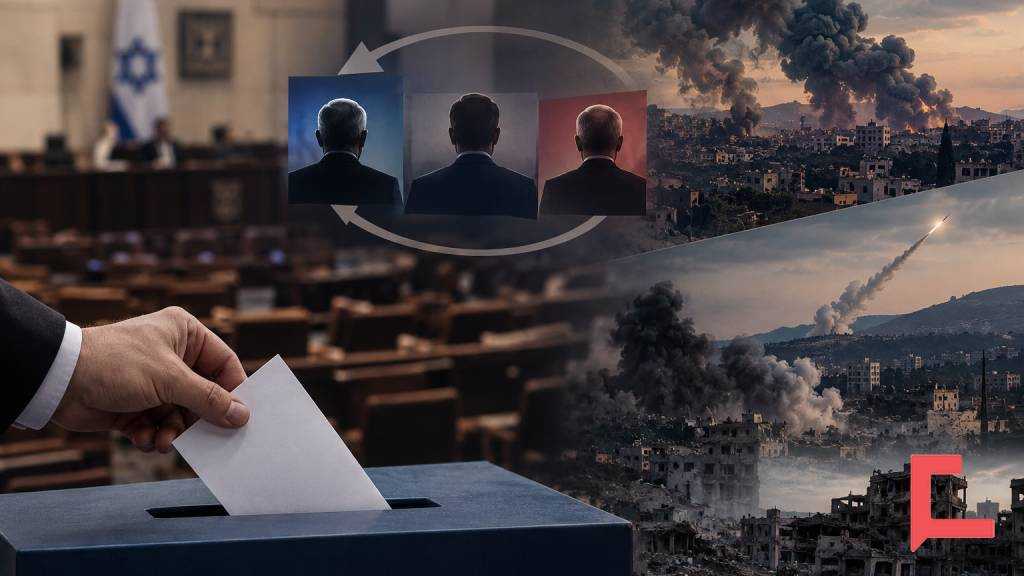
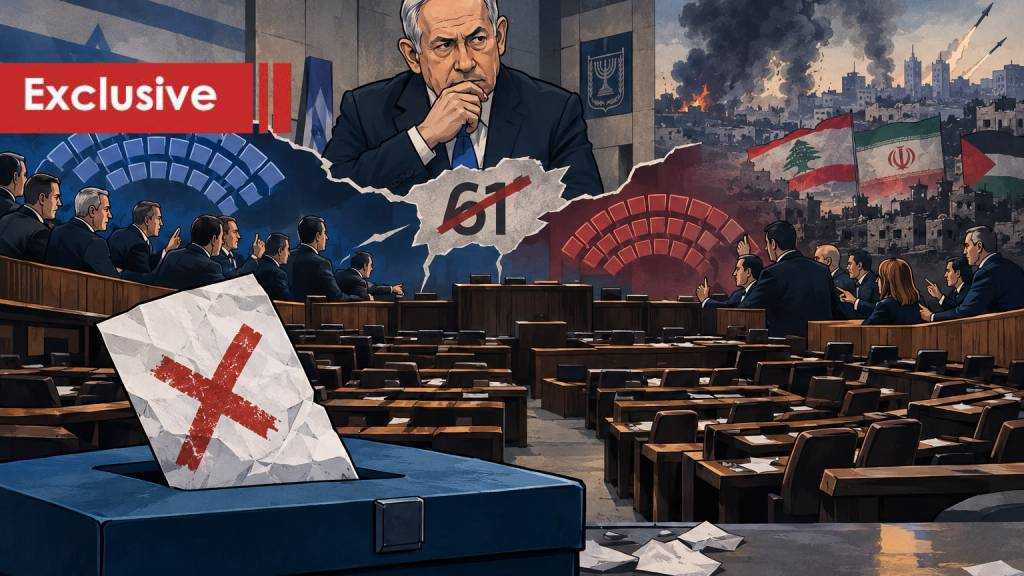
“Likud” leads individually with 27 seats, followed by Eisenkot’s “Yashar” party at 21, but neither primary coalition approaches the 61 seats required to form a government. Netanyahu’s partners- including Itamar Ben-Gvir’s Jewish Power, Bezalel Smotrich’s Religious Zionism, and ultra-Orthodox factions- remain eight seats short of a majority, so the entity’s President Isaac Herzog must oversee complex negotiations that could easily trigger another election. In the interim, Netanyahu retains full executive authority over military decisions, ensuring that the existing aggressive policy stance continues uninterrupted.
Eisenkot and the Dahiya Doctrine
Eisenkot, Netanyahu’s principal challenger, offers no genuine alternative to military coercion. Having commanded “Israel’s” armed forces from 2015 to 2019 and served in the wartime cabinet following October 2023, his record carries grim significance for regional states. In 2008, Eisenkot formulated the Dahiya Doctrine, named after Beirut’s southern suburbs devastated during the 2006 war, which explicitly advocates applying overwhelming military force, inflicting collective punishment, and destroying civilian infrastructure in targeted areas. Legal experts and human rights organizations have repeatedly emphasized that this deliberate targeting of non-combatant life and essential infrastructure constitutes a blatant violation of international humanitarian law, particularly the prohibition against disproportionate force. While Eisenkot criticizes Netanyahu’s tactical execution, his long record provides zero evidence of opposition to systemic violence. Other opposition figures share this militaristic consensus, as Naftali Bennett remains a right-wing “nationalist” opposed to territorial concessions, Avigdor Liberman demands hardline security measures, and Yair Golan’s Democrats lack the seats to alter the bloc’s rightward trajectory.
The Arab Vote’s Historic Contradiction
The election’s most significant parliamentary development is the Arab parties’ projected 19 seats, creating a combined strength that could theoretically transform the political landscape. The Joint List holds 12 seats and Mansour Abbas’s “Ra’am” holds seven, meaning an alignment with Eisenkot’s 48 seats would produce a 67-seat majority. Yet raw arithmetic cannot overcome systemic exclusion, because while Joint List leader Yousef Jabareen expressed willingness to vote down Netanyahu, Bennett and other potential opposition partners flatly refuse to rely on Arab support. This impasse exposes a fundamental hypocrisy in “Israel’s” political system, where Palestinians are granted the vote to lend so-called “democratic legitimacy” to the entity, yet their elected representatives are systematically barred from exercising real power.
Accountability Without Political Defeat
Most strikingly, the electorate’s sustained support for Likud demonstrates a disturbing willingness to embrace corrupt and reckless leadership. Netanyahu faces an active domestic corruption trial involving bribery and fraud, along with an International Criminal Court arrest warrant for war crimes in Gaza. Rather than rejecting a leader sought by international legal bodies, millions of voters proved that they prefer an indicted figure who promises relentless warfare over any diplomatic compromise. Unwavering Western military assistance and diplomatic shielding have effectively insulated the electorate from the moral and legal consequences of their choices, fostering an environment of total impunity.
Lebanon, Iran, and the Unchanged Conflict
For those facing the fallout across the border, the political drama in “Tel Aviv” changes remarkably little. For Lebanon, Eisenkot’s authorship of the Dahiya Doctrine dispels any illusion that Netanyahu’s departure would bring military restraint to the border. For Iran, both major political camps view Tehran as an existential adversary, differing only on tactical execution and coordination with Washington. For Palestinians, neither electoral combination offers an end to military occupation, land confiscations, or blockades. Ultimately, the election exposes two separate questions: who holds office in “Israel,” and whether its aggressive policies ever change.
Netanyahu may remain as a caretaker prime minister, or Eisenkot may replace him without abandoning military aggression; for the rest of the region, the leader’s identity matters far less than the unbroken commitment to war.