- Home
- ISLAMIC RESISTANCE
- SECRETARY-GENERAL
-
Full Speeches
- Speeches-2000
- Speeches-2006
- Speeches-2007
- Speeches-2008
- Speeches-2009
- Speeches-2010
- Speeches-2011
- Speeches-2012
- Speeches-2013
- Speeches-2014
- Speeches-2015
- Speeches-2016
- Speeches-2017
- Speeches-2018
- Speeches-2019
- Speeches-2020
- Speeches-2021
- Speeches-2022
- Speeches-2023
- Speeches-2024
- Speeches-2025
- Speeches-2026
- Speech-Reports
- SG
-
Full Speeches
- Voices
- Ten Day Dawn
- The Biggest Crime
- Martyr Leaders

Muslim Candidates Secure Historic Victories Across the US
By Staff, Agencies
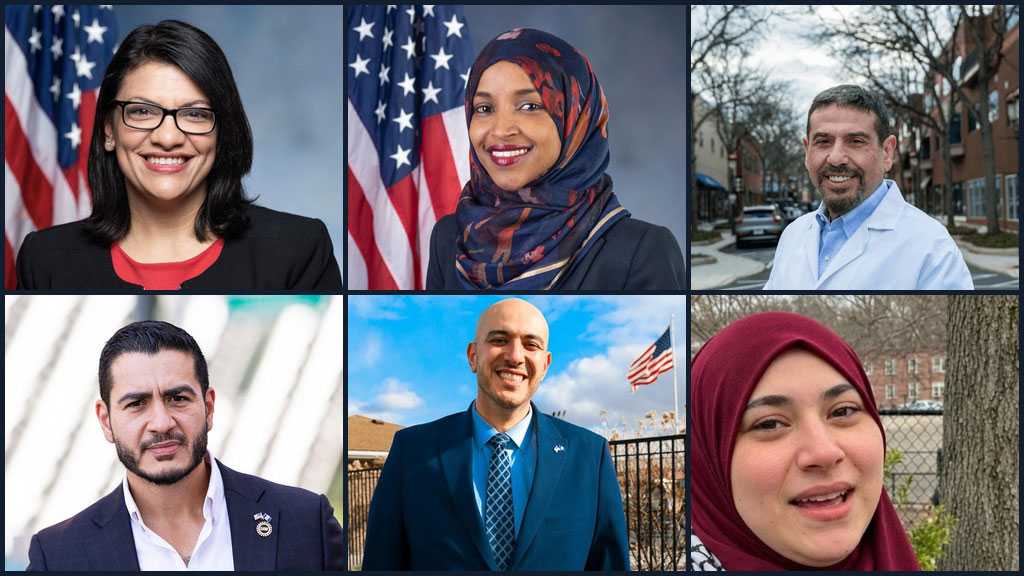
Results from the US midterm elections continue to highlight a significant breakthrough for Muslim representation in American politics, with several Muslim candidates securing historic victories in congressional races across the country.
According to unofficial preliminary results reported by US media, prominent Muslim lawmakers and candidates achieved decisive victories, strengthening the presence of Muslim and immigrant communities in US legislative institutions.
Palestinian-American Democratic Congresswoman Rashida Tlaib secured another significant victory in Michigan, retaining her seat in the House of Representatives. Tlaib has remained a prominent advocate for Palestinian rights, social justice and the interests of marginalized communities.
Meanwhile, incumbent Muslim Democratic Congresswoman Ilhan Omar won Minnesota's Fifth Congressional District with 62.77 percent of the vote, comfortably defeating Republican challenger John Nagel, who received 28.31 percent. The victory secured Omar a fifth term in the House and marked another important achievement for Muslim and immigrant representation in American politics.
Her re-election was widely viewed as a significant political milestone for Muslim communities across the United States.
In California, Latifa Simon also secured victory in a key congressional contest, further expanding Muslim representation in the House. Afghan-American political figure Ayesha Wahab likewise won her election in California, strengthening the representation of diverse Muslim communities in legislative institutions.
The Senate race in Michigan attracted particular attention, with Egyptian-American Democratic candidate Abdul El-Sayed securing victory and becoming the first Muslim elected to the US Senate.
El-Sayed played a significant role in mobilizing Muslim and Arab-American voters and ran a campaign centered on economic justice, healthcare and ending American military assistance to the “Israeli” entity.
In another historic achievement, Abbas Alawieh has become the first Lebanese national to win a seat in the Michigan State Senate, marking another milestone for Arab-American political representation in the United States.
Meanwhile, Abeer Qawas became the first Palestinian-American elected to the New York Senate, receiving strong support from New York City Mayor Zohran Mamdani.
In another notable development, Dr. Adam Hashim Hamawi, a physician who treated children from Gaza, won a congressional seat in New Jersey after defeating his Republican opponent.
These victories collectively represent an important moment for Muslim, Arab-American, Lebanese-American and Palestinian-American political representation, reflecting the growing electoral influence of these communities and their increasing role in shaping American political institutions.