“Bighad El Nazar”: When Wounded Bodies Reinvent Life
By Sarah Raad
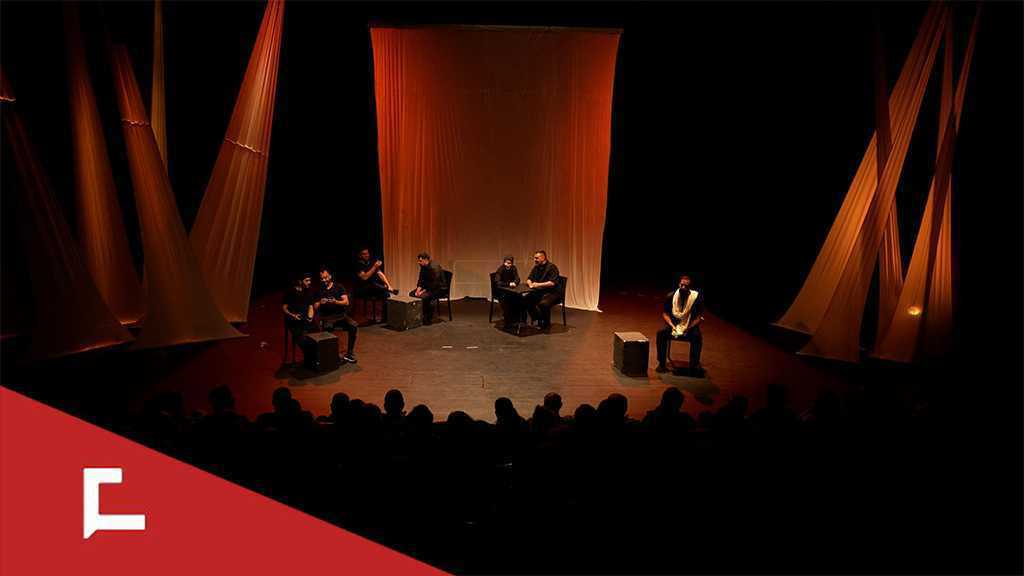
At the beating heart of Beirut, where the tragedies of everyday life intertwine with an indomitable will, Al-Madina Theatre, located on the famous Hamra Street, hosts an extraordinary performance that breaks tragedy free from its traditional confines, confronting audiences with the raw reality of the human experience.
“Bighad El Nazar” [Despite Everything] is far more than a fleeting theatrical production. It is a living document of resilience and healing through art, as well as a visual and psychological testament to the human soul’s ability to rise from the ashes of war.
From the Cruelty of Injury to the Vastness of the Stage
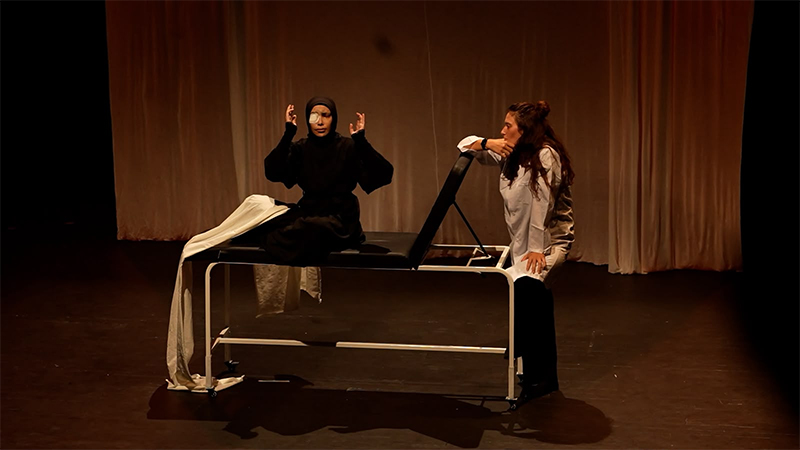
The origins of this performance lie in one of the darkest and most painful episodes in modern Lebanese history: the “Israeli” pager massacre in September 2024, which left thousands wounded, primarily affecting their eyes and limbs. Out of this tragedy emerged men and young people on stage who had lost their sight or limbs, alongside a young woman who had lost an eye, and prominent figures such as international athlete Ahmad Tala, who underwent a leg amputation.
These young people, the vast majority of whom had no previous theatrical experience, were transformed through rigorous training and under the guidance of director Dr. Sara Kassir, a storyteller and founder of the Al-Daira Center [The Circle], which specializes in theatre and performance arts in Beirut, into narrators of their own experiences.
Explaining the project's philosophy and artistic vision, Dr. Sara Kassir confirmed that theatre, in this context “does not look at what we have lost but rather at what remains within us.”
“We made sure that the injured person would no longer be an object of pity, but the author of their own story and a fully-fledged performer. In doing so, we turned drama therapy not only into a tool for healing but also into an artistic act that challenges stereotypical perceptions of disability,” she explained.
This approach enabled the production to move beyond the realm of “charity theatre” and assume a much deeper dimension: a theatre of testimony and resilience rather than pity.
The project emerged into light with the support of the European Union and the German Berghof Foundation, in collaboration with the Tamkeen for Independent Living Association.
Black Humor: A Tool for Healing and Survival
One of the most striking features of “Bighad El Nazar” is its outright rejection of clichés and direct political discourse. The performers do not merely “act out” the tragedy; they relive it on stage with poignant honesty, wielding black humor as a powerful weapon against despair.
This is where the audience's emotions resonate with the artistic vision, as reflected in the reaction of Ms. Mariam Haidar, who closely follows the cultural scene and was deeply moved by the performance.
“I did not expect to witness such positive energy emanating from people who had come so close to death and sustained such severe injuries. The performance brought us to tears, but it also made us smile and applaud with genuine respect. This is not charity theatre; it is high-caliber art that celebrates life,” she said.
This liberating laughter, born of oneself and directed inward, is by no means a mockery of pain. Rather, it is a conscious technique of healing and survival.
A poignant scene, filled with self-deprecating humor, illustrates this when one of the protagonists asks his mother for his shoe. She replies that she can only find “the other one,” prompting him to remind her that he has only one leg, as the other was blown off by a landmine.
This defiance of the image of the broken victim deeply resonates with the audience. Rami, a young spectator, shares his impressions:
“What struck me most was the way they address their disabilities with gentle, confident irony. When an injured person laughs at their own reality, they disarm everyone who looks at them with pity. We all felt that we were witnessing the performances of true heroes who are redefining the meaning of masculinity and resistance.”
Powerful moments unfold throughout the performance, but the image that has undoubtedly remained etched in the audience's memory is that of the visually impaired child confidently making his way across a row of chairs.
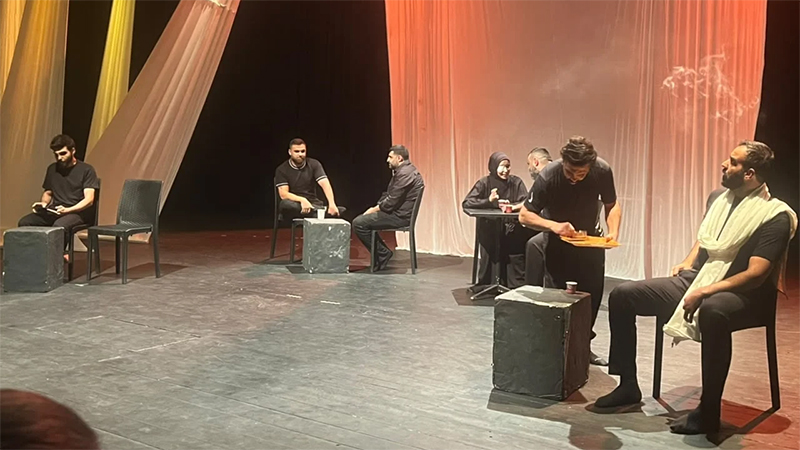
Here, the chairs cease to be mere stage props and become a path and a memory. Moving forward becomes a clear and unequivocal message: life goes on.
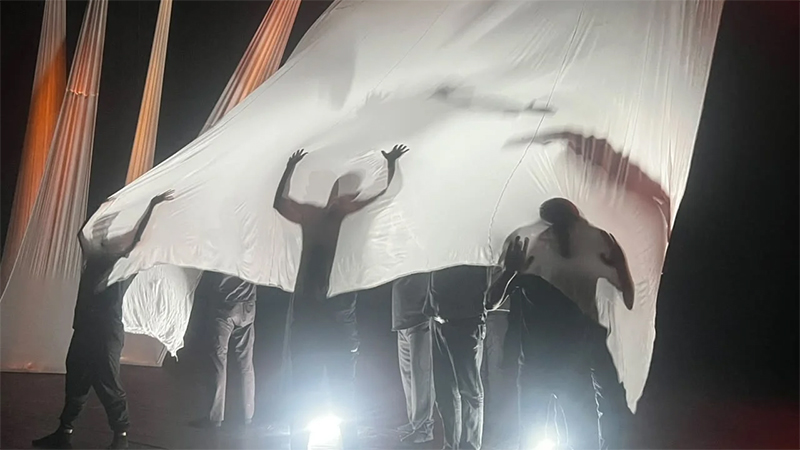
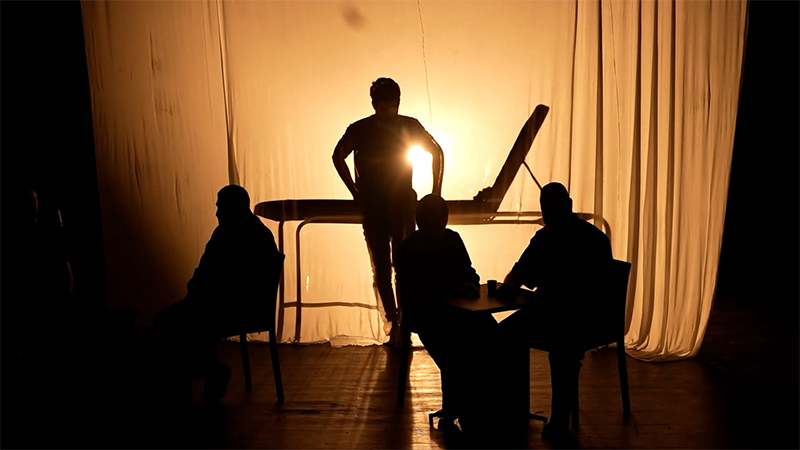
This poetic stage design features white fabrics suspended from the floor upwards, creating a striking visual contrast. It strips white of its associations with mourning and transforms it into a space where meaning can be created amid the ruins. This contrasts with the performers' black clothing, while live piano and trumpet melodies lend the performance a vibrant, pulsating energy.
A Moral Covenant
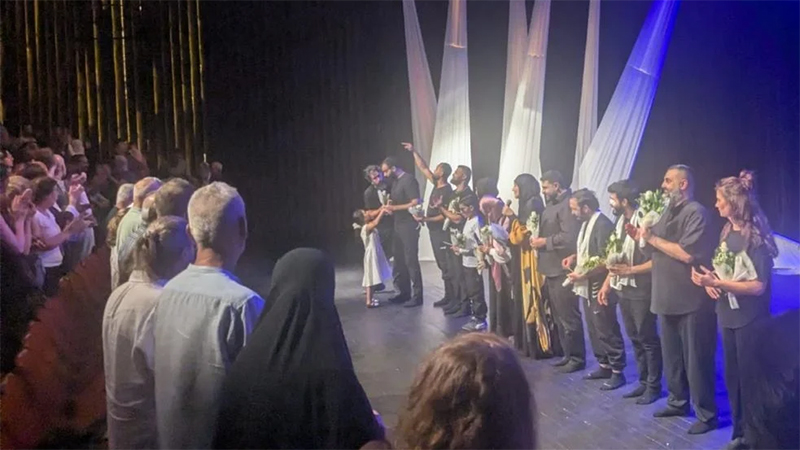
As the curtain fell, Al-Madina Theatre erupted into a prolonged standing ovation, with thunderous applause lasting more than 15 minutes.
These cheers were not merely expressions of artistic courtesy; they constituted an unspoken moral covenant between an audience whose hands were still ringing with applause and artists who had transformed their wounded bodies into beacons of hope.
The reception given to this production by Al-Madina Theatre and its distinguished director, Nidal Al-Achkar, amid the overwhelming crises facing Lebanon, reaffirms once again that culture in this country remains the last line of defense for identity and life.
“Bighad El Nazar” is not merely a theatrical production to be assessed according to the conventional standards of academic criticism. It is a timeless human document proving that when theatre breaks free from the constraints of slogans, it once again becomes the purest expression of the true essence of human identity.