- Home
- ISLAMIC RESISTANCE
- SECRETARY-GENERAL
-
Full Speeches
- Speeches-2000
- Speeches-2006
- Speeches-2007
- Speeches-2008
- Speeches-2009
- Speeches-2010
- Speeches-2011
- Speeches-2012
- Speeches-2013
- Speeches-2014
- Speeches-2015
- Speeches-2016
- Speeches-2017
- Speeches-2018
- Speeches-2019
- Speeches-2020
- Speeches-2021
- Speeches-2022
- Speeches-2023
- Speeches-2024
- Speeches-2025
- Speeches-2026
- Speech-Reports
- SG
-
Full Speeches
- Voices
- Ten Day Dawn
- The Biggest Crime
- Martyr Leaders

WHO Chief Calls for Peace in Gaza, Says “Most Courageous Leaders Choose Peace”
By Staff, Agencies
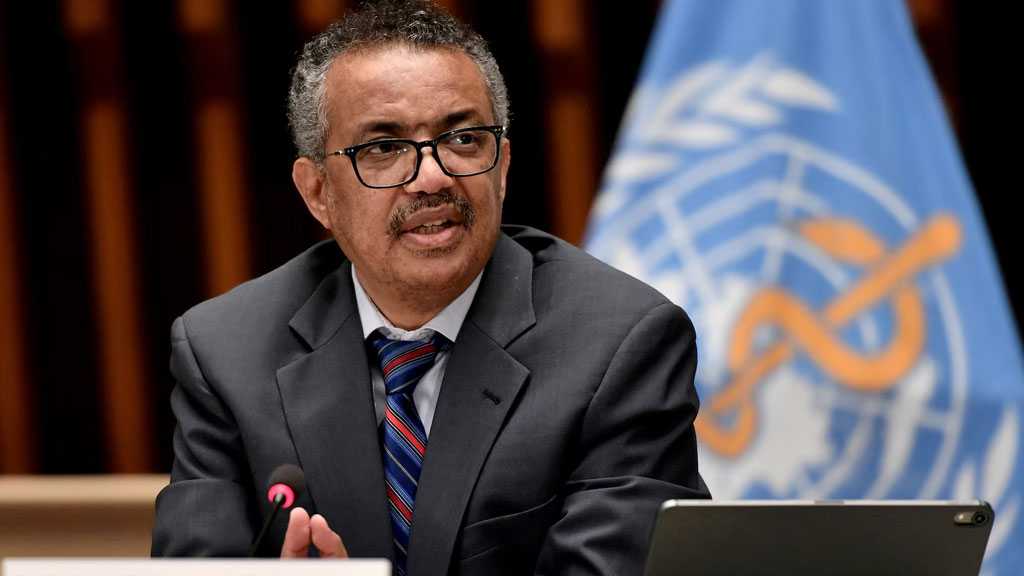
World Health Organization [WHO] Director-General Tedros Adhanom Ghebreyesus has called on world leaders to prioritize peace and pursue political solutions to the conflict in Gaza, stressing that ending wars requires political courage and commitment.
“Peace is the best medicine; the most courageous leaders choose peace. The world must commit to it,” Tedros told Anadolu on Monday on the sidelines of the COP31 climate summit in Antalya, Turkey.
Asked about his message to the international community ahead of the end of his term in mid-August, the WHO chief underscored the urgent need for political solutions to ongoing conflicts.
Commenting on the situation in Gaza, Tedros acknowledged that some improvements had been made but warned that the progress remained insufficient.
“There has been some improvement,” he said, adding that world leaders must prioritize political solutions to bring an end to the suffering.
“Our leaders must focus on political solutions for Gaza,” he stressed.
Separately, speaking at a joint news briefing with Turkish Health Minister Kemal Memisoglu, Tedros called for urgent action to protect populations and healthcare systems from the increasingly severe effects of climate change.
“The health impacts of climate change are not a theoretical risk for the future; they are here and now,” he warned.
Tedros explained that climate change was already contributing to illness, disrupting essential services, and exposing healthcare workers to growing risks.
He urged governments to strengthen hospitals and medical facilities to ensure they remain operational during extreme weather events, including heat waves, floods and severe storms.
The WHO chief highlighted the importance of securing reliable electricity and water supplies, establishing effective early warning systems, strengthening medical supply chains and ensuring sufficient numbers of trained healthcare personnel.
He noted that although countries were aware of many of the measures required to make their health systems more resilient, financial constraints, limited institutional capacity, and insufficient coordination continued to obstruct large-scale implementation.
“The focus now should be implementation, implementation and implementation,” Tedros emphasized.
He also welcomed the Antalya Initiative for Health Resilience, describing it as a practical platform through which countries could exchange experiences and adapt successful approaches to their own national circumstances.
His remarks highlighted the need for stronger international cooperation, both in addressing humanitarian crises such as Gaza and protecting global healthcare systems from the growing consequences of climate change.
Comments
- Related News