The Heart of Dahiyeh: Where Lebanon Remembers Its Martyrs
By Fatima Haydar
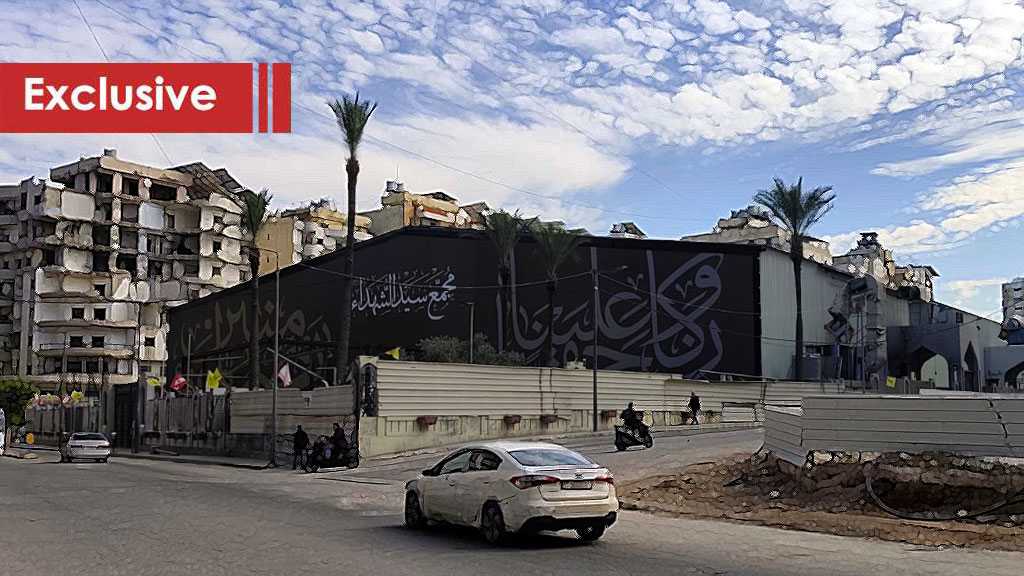
On November 11, thousands will gather at the Sayyed Al-Shuhada (AS) Complex for Hezbollah’s annual Martyr Day. But this year, the gathering carries a particular meaning. The complex has risen again after being destroyed, while the memories of those who once filled it remain with the people who return.
Who in Lebanon has not heard of the Sayyed Al-Shuhada (AS) Complex? And who in Dahiyeh does not know what it means to the people who have gathered there for years?
The complex may not stand at the geographical center of Beirut’s southern suburb, but it occupies a different kind of center in the lives of its people. For years, it has been where Dahiyeh’s public life seemed to converge: a place where people gathered for celebrations and in times of grief, where they listened to the addresses of the late Hezbollah Secretary General, His Eminence Sayyed Hassan Nasrallah, and where they came together as a community.
For those outside Lebanon, the complex may be best known as the place where Martyr Sayyed Nasrallah delivered many of his speeches. But for the people of Dahiyeh, it means much more. It holds years of gatherings, familiar faces, shared moments and the voices of people who are no longer here.
The “Israeli” aggression that martyred Sayyed Nasrallah and later destroyed the complex was not only an attack on a building. For the people who had gathered there for years, it was an attack on a place deeply tied to their memories and identity. The complex had already been destroyed during the 2006 and 2024 wars. It was struck again in the 2026 war. Yet, each time, the people returned, determined to rebuild what had been destroyed.
This time, it did not take long for the complex to open its doors again. Less than a month after suffering severe damage in the latest war, it hosted the annual Souk Ardi [My Land Exhibition]. The event brought together small businesses and local producers from South Lebanon, Dahiyeh, the Beqaa and other parts of Lebanon. For many, it offered a chance to get back on their feet after losing homes, businesses and sources of income.
That return says something about the relationship between this place and the people around it. The complex is not simply a venue that can be closed when damaged and reopened when repaired. Its meaning comes from the people who keep returning to it, carrying their memories and rebuilding their lives around it.
On November 11, the complex will host another gathering, this time for the annual Martyr Day. Hezbollah Secretary General His Eminence Sheikh Naim Qassem will deliver a speech as thousands gather to mark the occasion. Among them will be families who have lost sons, daughters, fathers, friends and loved ones in the successive “Israeli” aggressions on Lebanon.
Many of those who will be remembered once stood among the crowds at this very complex. They listened to Martyr Sayyed Nasrallah and shared moments of happiness and sorrow with the people around them. Today, their absence is felt in the very place where they once stood.
I felt that absence myself when I stood inside the complex. I had come simply to take a breath, but the place brought back memories of people I had been there with on so many occasions. They were no longer there. They had been martyred during the war.
It is difficult to stand in a place filled with so many memories without thinking of the people who are no longer part of them. A speech, a gathering or even a passing moment can bring someone back to mind. And among those memories, Sayyed Nasrallah remains deeply present.
But sometimes, the memories we carry are not of speeches or major events. Sometimes, they begin with a small act of kindness from someone whose full story we only come to know later.
In the early hours of March 2, as a young woman and her family were displaced from South Lebanon, she pulled her car over, trying to find a place where they could pray. It was Ramadan, and a man approached them and asked why they had stopped.
She told him they were waiting for the Adhan – the call to prayer. He understood that they were fasting and had not had anything to drink. Before she could even answer, he went and bought them water and cake. He waited until they had what they needed, then, as they were leaving, he called after them: “Pray for me.”
Days later, she learned that he had been martyred. Only then did she discover his name: Hadi Ali Khamis.
Her words stayed with me: “I should have known from his kindness and generosity.”
I knew Hadi. And perhaps that is why this story carries a particular weight for me. It reminds us that behind every name we remember on Martyr Day is a person with a life, a character and moments that those around them may never forget. Sometimes, an ordinary act of kindness tells us more about a person than any title ever could.
Hadi did not introduce himself or tell that family about the responsibilities he carried. He simply noticed that they needed something and helped them. They remembered a man who had stopped to care for strangers during a night of displacement. Only after his martyrdom did they learn who he was.
There is a saying often used to describe such people: “Unknown on earth, known in heaven.” It speaks of those who carry their responsibilities quietly, away from fame, recognition and the spotlight. Some are known by their titles or by the responsibilities they carry, while their real names and faces remain hidden because of the nature of the responsibilities they carry.
Sayyed Nasrallah once explained this when speaking about figures whose identities had to remain concealed during their lives, particularly those working in security and military fields. After their martyrdom, however, he wanted their real names and faces to be known, so people would remember them not only by their titles but as individuals.
Hadi's story brings that meaning closer to home. The family he helped did not know his name when he approached them. They remembered his kindness, and only later discovered the identity of the man who had stopped to help them.
His story is only one of countless others, some told and others still waiting to be heard. They remind us that those we remember on Martyr Day were never just names, photographs or titles. They were people with families, friends, personal histories and ordinary moments that became extraordinary memories for those they left behind.
No matter how brutal the “Israeli” aggression, it will never erase who these martyrs were, what they stood for, or the memories they left behind. To give one’s life for a cause greater than oneself, for one’s community and the people one belongs to, is a profound sacrifice that must never be forgotten. Their names, their stories and what they gave remain part of a collective memory that no aggression can take away.
This is why the Sayyed Al-Shuhada (AS) Complex carries a meaning that cannot be measured by its size or its walls. It is where people remember Sayyed Nasrallah, but also where they remember their own loved ones, the people they stood beside, listened to and shared moments with.
On Martyr Day, as thousands gather once more, the complex will hold more than a speech. It will hold the absence of those who are no longer there, the memories of those who once stood among the crowds and the stories of people like Hadi Ali Khamis, whose actions became known to others only after his martyrdom.
The complex is often described as the heart of Dahiyeh. Perhaps that is because so much of what its people have lived through the joy, the grief, the loss and the resilience, has passed through this place.
Its repeated destruction has not erased what it means to them. The buildings may be destroyed and rebuilt, and the faces in the crowds may change, but the memories carried by this place live on in the people who return and the families who remember.
Some are remembered for the speeches they delivered. Others for the responsibilities they carried. And some, like Hadi, for a bottle of water, a piece of cake and a simple request: “Pray for me.”
On Martyr Day, the Sayyed Al-Shuhada (AS) Complex will once again bring people together. But it is the lives, memories and stories of the martyrs that give this gathering its meaning. They may no longer stand among the crowds, but they remain present in the memories of those who loved them, knew them and continue to tell their stories.
To you, the martyrs, I dedicate these words. Though absent from our sight, you remain alive in our hearts, our memories, and in every story we continue to tell.
Comments