- Home
- ISLAMIC RESISTANCE
- SECRETARY-GENERAL
-
Full Speeches
- Speeches-2000
- Speeches-2006
- Speeches-2007
- Speeches-2008
- Speeches-2009
- Speeches-2010
- Speeches-2011
- Speeches-2012
- Speeches-2013
- Speeches-2014
- Speeches-2015
- Speeches-2016
- Speeches-2017
- Speeches-2018
- Speeches-2019
- Speeches-2020
- Speeches-2021
- Speeches-2022
- Speeches-2023
- Speeches-2024
- Speeches-2025
- Speeches-2026
- Speech-Reports
- SG
-
Full Speeches
- Voices
- Ten Day Dawn
- The Biggest Crime
- Martyr Leaders

Iranian Senior Cmdr.: Any Location Used to Attack Iran Will Face Retaliation
By Staff, Agencies
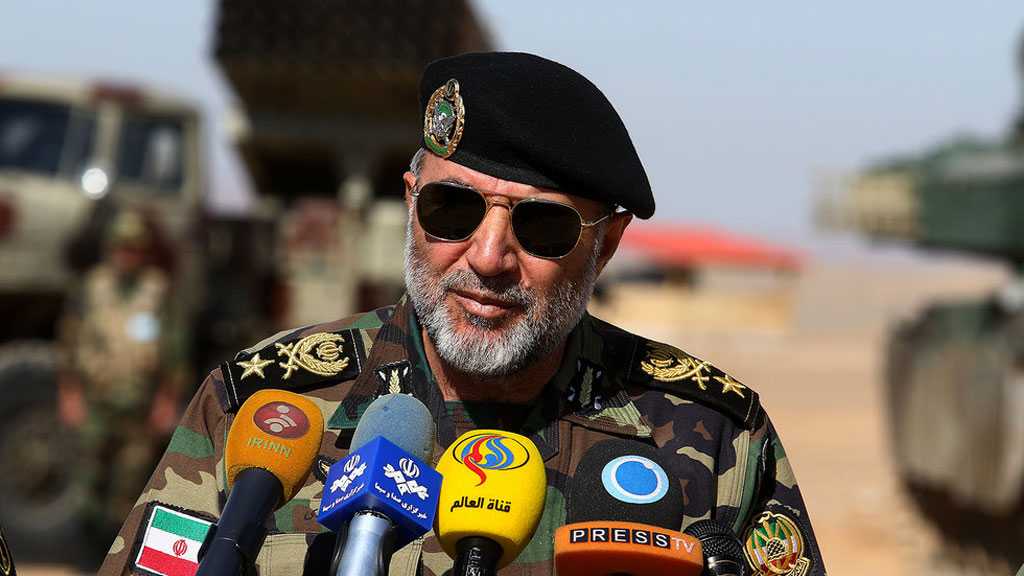
Iran’s Deputy Chief of Staff of the Armed Forces, Brigadier General Kioumars Heydari, has warned that any location worldwide used to launch attacks or conduct hostile operations against Iran would face a comprehensive military response.
Speaking in a televised interview on Wednesday, Heydari said Iran’s Armed Forces had developed an updated database of potential targets following the removal of geographical restrictions on possible retaliation, under directives from Leader of the Islamic Revolution His Eminence Ayatollah Sayyed Mojtaba Khamenei.
He explained that the target list includes military facilities and other locations across the region and beyond that could be used by the United States and the “Israeli” entity.
Heydari emphasized that Iran was fully prepared to respond to any renewed aggression. He warned that countries allowing hostile aircraft to operate from their territory or permitting missile launches from their soil could also be considered legitimate targets by Tehran.
The Iranian commander also highlighted the country’s military capabilities, referring to the previously unveiled underground missile facility and the Army’s newly established drone facility. He said Iran had not yet revealed the full extent of its military capabilities, describing its undisclosed weapons systems as major strategic assets.
According to Heydari, these developments, alongside recent military visits to Iran’s southern borders, were intended to send a message to the country’s adversaries that its Armed Forces were prepared for another confrontation.
He further said that Iranian retaliatory operations had destroyed several advanced US defensive and radar systems deployed at regional military bases, including equipment designed to detect stealth aircraft and warships, as well as electronic warfare systems.
Heydari also stated that US warships had withdrawn approximately 500 kilometers from the maritime boundary near the southern Iranian port city of Chabahar. Additionally, he alleged that nearly 300 enemy aircraft had been destroyed, either in flight or on the ground, and that Iranian electronic warfare systems had captured several advanced aircraft intact.
The commander attributed Iran’s military capabilities to its expanding domestic defense industry, revealing that more than 1,700 knowledge-based companies were cooperating with the military sector to develop and manufacture equipment locally, from basic components to advanced weapons systems.
He also stressed that Iran was developing asymmetric warfare capabilities to counter adversaries relying on aircraft carriers and large naval strike groups.
Concluding his remarks, Heydari pointed to public demonstrations supporting the Armed Forces, describing popular backing as an important source of encouragement for military personnel.
He further declared that Iran’s leadership, population, and military remained determined to avenge the martyrdom of former Leader Imam Sayyed Ali Khamenei during what Tehran describes as the latest US-“Israeli” aggression.
The commander reaffirmed that Iran would continue pursuing those responsible, insisting that the country remained committed to retaliating for the death of its former leader.
Comments
- Related News