- Home
- ISLAMIC RESISTANCE
- SECRETARY-GENERAL
-
Full Speeches
- Speeches-2000
- Speeches-2006
- Speeches-2007
- Speeches-2008
- Speeches-2009
- Speeches-2010
- Speeches-2011
- Speeches-2012
- Speeches-2013
- Speeches-2014
- Speeches-2015
- Speeches-2016
- Speeches-2017
- Speeches-2018
- Speeches-2019
- Speeches-2020
- Speeches-2021
- Speeches-2022
- Speeches-2023
- Speeches-2024
- Speeches-2025
- Speeches-2026
- Speech-Reports
- SG
-
Full Speeches
- Voices
- Ten Day Dawn
- The Biggest Crime
- Martyr Leaders

Mohsen Rezaei’s Rise to Iran’s Security Leadership
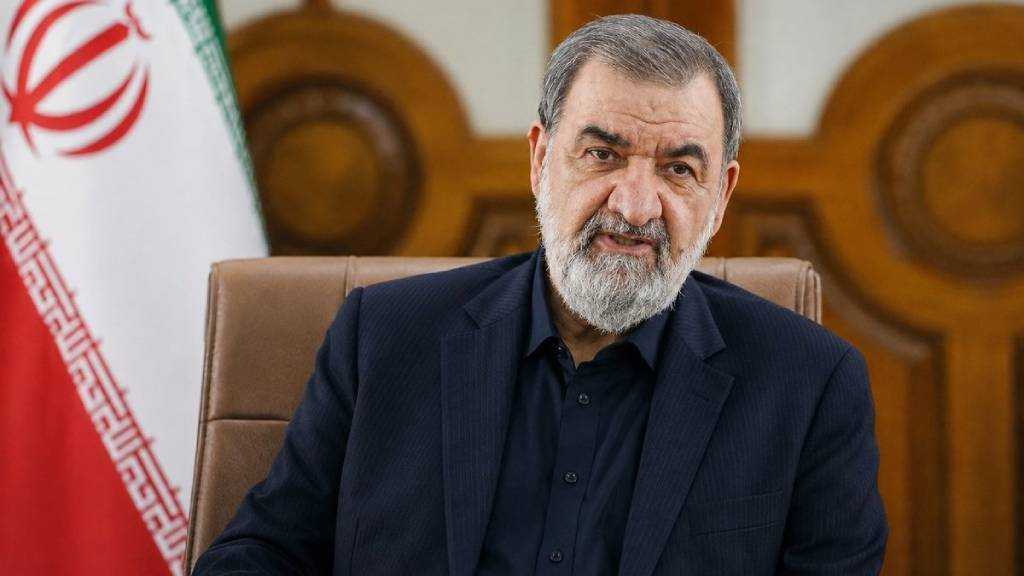
By Staff, Agencies
Mohsen Rezaei, appointed secretary of Iran’s Supreme National Security Council, has spent decades serving across political activism, military leadership and senior policymaking roles in the Islamic Republic.
Born in September 1954, Rezaei began his political opposition to the Pahlavi monarchy while still in secondary school. His activities led to his arrest in 1973, when he was 17, and he spent six months imprisoned in the city of Ahvaz.
The Supreme National Security Council is one of Iran’s principal decision-making institutions. It is responsible for determining defense and security policies and coordinating political, military, intelligence, and economic matters related to national security.
Under Article 176 of Iran’s Constitution, the council is chaired by the President and includes senior officials representing the various branches of government, the armed forces, and the Islamic Revolutionary Guards [IRG]. Its decisions take effect following approval by the Leader of the Revolution.
Rezaei, 71, is one of the IRG’s most prominent historical commanders. He assumed command of the force in his late twenties and led it through most of the Iran-Iraq War, remaining in the post until 1997.
Rezaei began his political activism in the 1970s, helping establish the Mansouroun organization and remaining active in the opposition until the 1979 Islamic Revolution. After the revolution, he joined the Mojahedin of the Islamic Revolution Organization before moving into Iran’s emerging security and military institutions, establishing the IRG’s intelligence unit in 1979.
Rezaei became commander-in-chief of the IRG in 1981, a position he held throughout the eight-year Iran-Iraq War. He oversaw major restructuring of the Guard and the formation of its ground, naval and air forces, while helping establish Imam Hussein University and Baqiyatallah University. He later led the Khatam al-Anbiya Construction Headquarters, expanding his role into economic and reconstruction affairs.
In 1997, Rezaei was appointed secretary of Iran’s Expediency Discernment Council, marking his shift from military leadership to broader economic and strategic policymaking. He contributed to major initiatives including the 20-Year Vision Document, foreign investment policies and reforms related to Article 44 of the Constitution.
He began studying mechanical engineering in 1974 before returning to university after the Iran-Iraq War to study economics. He earned a PhD in economics from the University of Tehran in 2000.
His career has since spanned opposition activism, IRG leadership, senior military command and strategic policymaking.
Comments
- Related News