- Home
- ISLAMIC RESISTANCE
- SECRETARY-GENERAL
-
Full Speeches
- Speeches-2000
- Speeches-2006
- Speeches-2007
- Speeches-2008
- Speeches-2009
- Speeches-2010
- Speeches-2011
- Speeches-2012
- Speeches-2013
- Speeches-2014
- Speeches-2015
- Speeches-2016
- Speeches-2017
- Speeches-2018
- Speeches-2019
- Speeches-2020
- Speeches-2021
- Speeches-2022
- Speeches-2023
- Speeches-2024
- Speeches-2025
- Speeches-2026
- Speech-Reports
- SG
-
Full Speeches
- Voices
- Ten Day Dawn
- The Biggest Crime
- Martyr Leaders

Oil Pollution Hits Qeshm, Hengam After US-Israeli Aggression
By Staff, Agencies
The environmental fallout from the US-Israeli aggression against Iran has reached the country's southern coastline, with oil pollution affecting parts of Qeshm and nearby Hengam islands in the Persian Gulf.
Shina Ansari, head of Iran's Environmental Protection Organization, said Thursday that the contamination along the southern coasts of Qeshm and Hengam was among the "clear consequences of the military aggression on Iran's coastal and marine ecosystem."
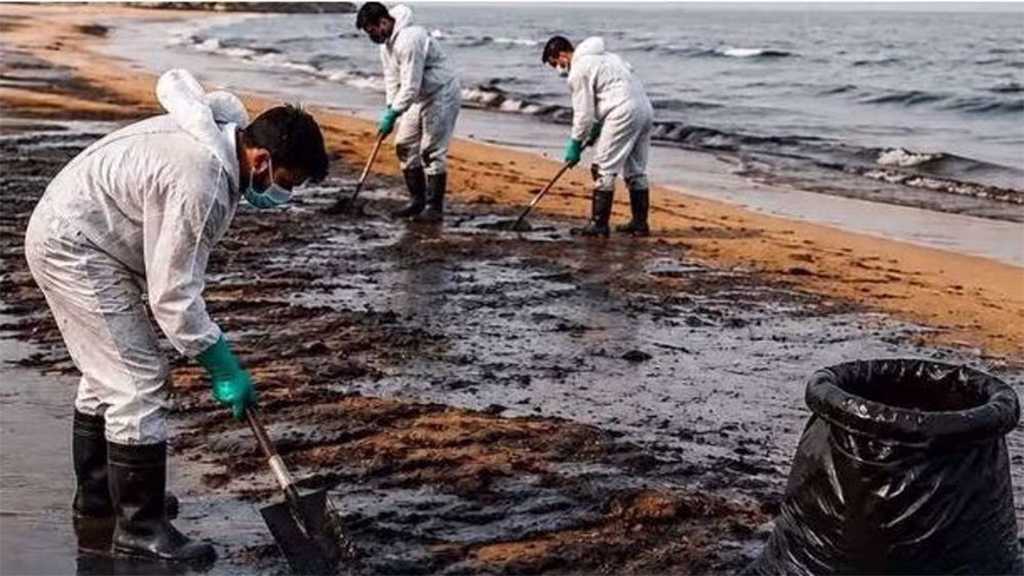
Environmental authorities, government bodies, and local communities are working to contain the pollution and clean affected areas, with part of the Suza coastline already cleared.
Omid Sedighi, director general of the Marine Pollution Office, said parts of the coasts of Suza, Shib Deraz, and Naqasheh, along with a limited section of Hengam Island, had been affected in recent days.
Specialized environmental teams have been deployed to monitor the affected areas, while cleanup operations are being conducted in coordination with local authorities, village councils, communities, and NGOs.
The Ports and Maritime Organization and Qeshm Free Zone Organization have also joined the response. Around 950 meters of the Suza shoreline have already been cleaned manually.
Hormozgan's environmental protection authorities said pollution along southern Qeshm had been almost completely collected by Wednesday evening, while cleanup efforts in Shib Deraz and Naqasheh were continuing.
The provincial authority estimated that the pollution had affected around 32,000 square meters of coastal areas and approximately 90,000 square meters of marine waters over two days.
Despite the contamination, monitoring teams reported finding no carcasses of dolphins, sea turtles, or other aquatic and coastal species linked to the pollution. Officials also said Shib Deraz beach and its important sea turtle habitat had not been damaged.
Oil slicks were removed using specialized absorbent materials, while contaminated sand was stripped from affected beaches to a depth of two to five centimeters.
The latest pollution adds to the environmental fallout from the US-Israeli aggression against Iran, which has also targeted the country's oil and energy infrastructure.
On April 8, US-Israeli forces struck Iran's Lavan oil refinery, causing fires and damage and sending petroleum contamination into surrounding waters.
Iranian environmental authorities subsequently reported pollution along the southern and eastern shores of Lavan Island and the mainland coast near Bandar Maqam, with contamination also detected around Qeshm, Larak, Hengam, and Hormuz islands.
The incidents have raised concerns over the broader environmental damage caused by attacks on Iran's oil infrastructure, particularly along the ecologically sensitive coastline of Hormozgan Province.
Comments
- Related News