Hajj Abd Al-Qadir: The Radwan Force Commander on the Battlefield
By Mohammad Daaibes
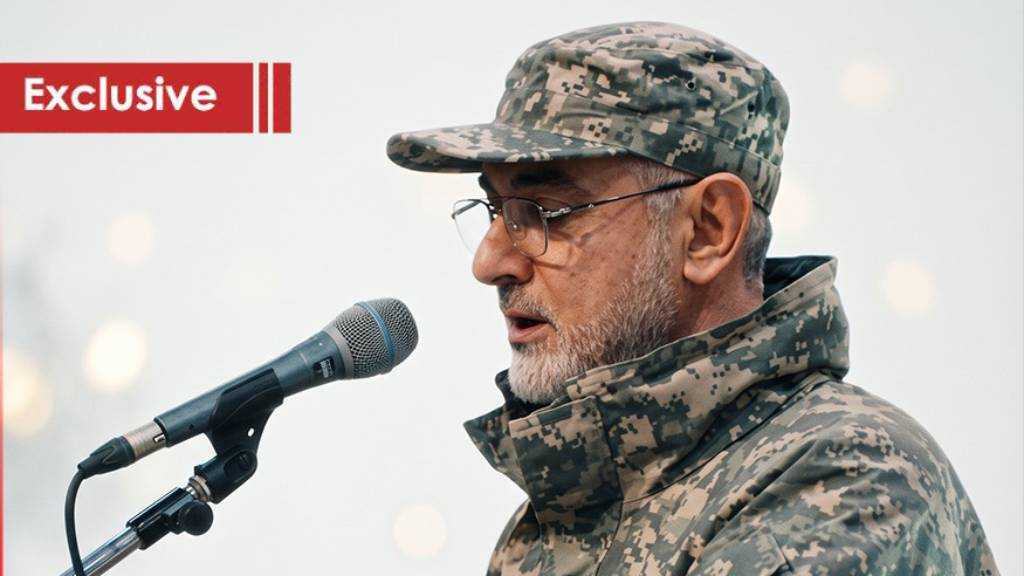
When asked about his identity, Hajj Abd al-Qadir, known as “Hajj Tahseen” in the memory of the generation that witnessed the movement’s early beginnings, had no answer other than that he was a “son of Islam.” In doing so, he evoked the spirit of the noble companion Salman al-Farisi. For him, belonging was a purely Quranic vision and a comprehensive way of life, reflected in every aspect of his thinking, leadership, ethics, and sense of responsibility. To a casual listener, the phrase may appear to be a brief answer that puts an end to the question. But to those who knew him, it was the distillation of an entire life journey, one that began in the town of Budnayel in the Bekaa, where Hajj Ibrahim Muhammad Aqil was born on December 24, 1962.
The story did not begin with weapons. At the age of fifteen, he went to the Muslim Scouts Association in Beirut accompanied by a relative. He was captivated by the scouting movement and fascinated by its musical band, so he joined. He mastered playing seven instruments, foremost among them the trumpet and then the piano. He composed several pieces and possessed an exceptionally keen musical ear and refined taste in selecting what he played. After several months, he moved to the Amiliya Scouts, where he remained until the age of nineteen. Then came the “Israeli” invasion of Lebanon, diverting him from this sensitive and artistic aspect of his personality toward another arena: confronting the occupier.
In that arena, he belonged to the founding generation of Islamic activism in Beirut and was among the commanders of operations during the resistance to the “Israeli” invasion of the capital in the early 1980s. He subsequently advanced through various responsibilities. In the early 1990s, he assumed responsibility for central training within Hezbollah and played a key role in developing the human capabilities of the resistance formations. He then took charge of the staff command in the mid-1990s.
Beginning in 1997, he assumed responsibility for the Jabal Amel Operations Unit, remaining in that role until after the liberation in 2000. During that period, he directly led a number of specialized operations. He was among those who established the pillar of the Islamic Resistance’s operations. From 2008 onward, he served as the deputy secretary-general for operations affairs and was appointed a member of the Jihad Council.
When the July 2006 War broke out, he was among the commanders leading the response to the aggression. He supervised the establishment and development of the Radwan Force and led it until his martyrdom. He was also among the commanders who planned and directed operations against takfiri groups. Since the launch of the “Al-Aqsa Flood” Battle, he had been responsible for planning and overseeing the military operations of the Radwan Force on the Lebanese support front.
Perhaps there is a meaning that goes beyond the apparent contrast in the journey of a man who began with musical notes and ended on the battlefield. The ear that distinguishes a precise musical note is the same ear that understands the value of discipline, timing, and harmony between different parts—qualities needed by someone who builds an entire combat formation. But this is a retrospective interpretation that we project onto this commander’s life story. As for him, the only answer he was known to give was the one with which we began: “A son of Islam.”
On September 20, 2024, Hajj Abd al-Qadir was martyred in an “Israeli” airstrike targeting a building in the al-Qa’im area of Beirut’s southern suburbs, along with a number of his fellow resistance fighters. Hezbollah mourned him as a “martyr on the road to Al-Quds” and stated in its announcement that Al-Quds had always occupied a place in his heart, mind, and thoughts.
Today, on the second anniversary of his martyrdom, his life story leaves us with a question—not about who he was, but about what it truly means for a person to be a “son of Islam” in deeds rather than words: to remain true to the commitments he has made and to let his conduct bear witness to him before his tongue does.