The Most Honored Martyr in the Eyes of the Egyptians
By Ihab Shawqi
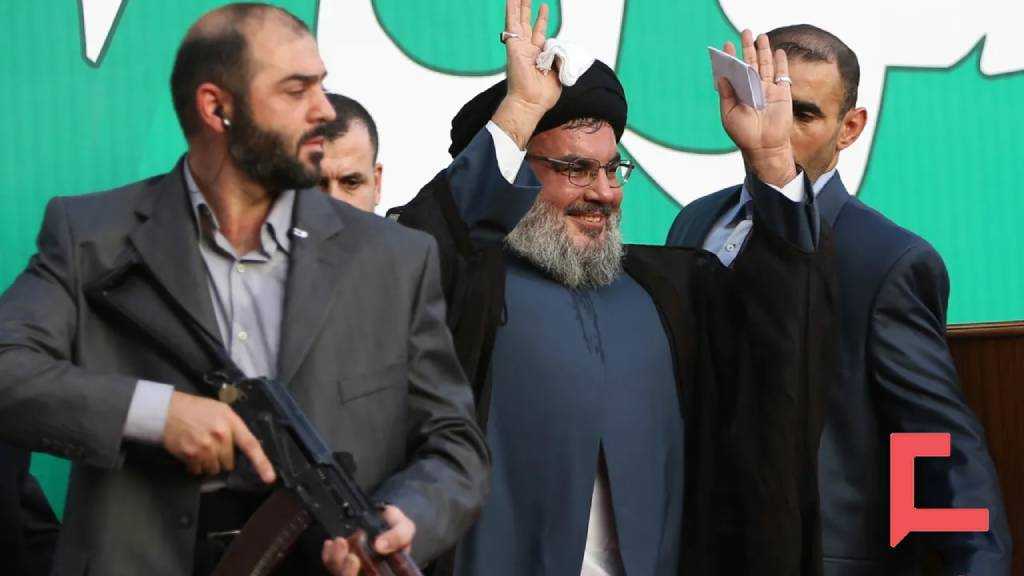
Egyptians have a long history with the most honored martyr, Sayyed Hassan Nasrallah. It began with their following Hezbollah and its heroic operations in the south, reached its peak during the July 2006 War, and did not end even after his blessed martyrdom. He became a symbol and a member of the list of honored figures and leaders whom Egyptians hold in high esteem.
Because Egypt is the largest Arab population center, with a population exceeding 120 million [109 million inside the country and 11 million abroad], accounting on its own for roughly a quarter of the Arab world’s population [approximately 460 million], it contains numerous popular segments, most of which support and admire the martyr, as reflected in the general public mood and the nature of the Egyptian people, as demonstrated by the majority on numerous occasions.
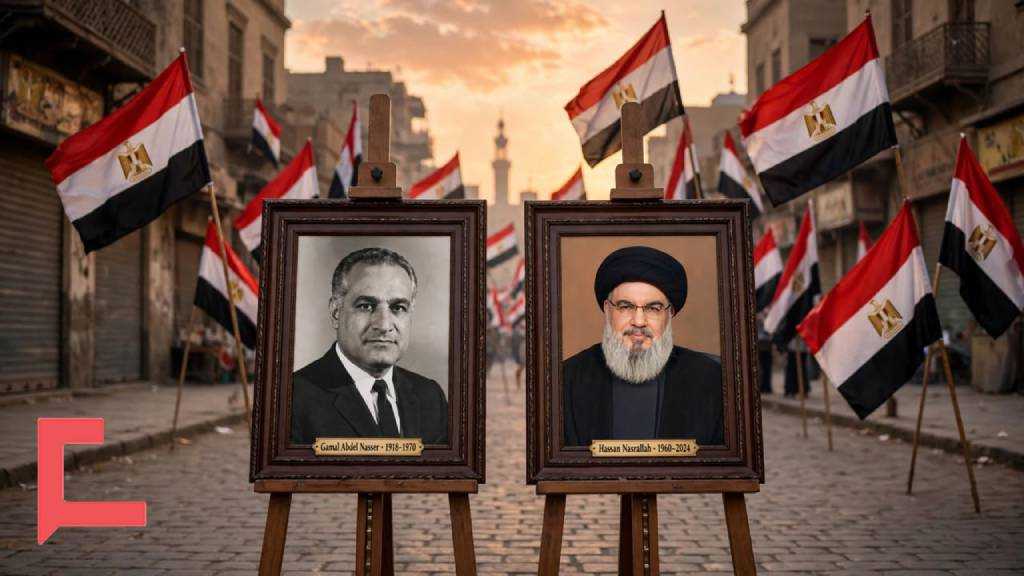
This can be gauged through gatherings that displayed images of Sayyed Nasrallah alongside those of leader Gamal Abdel Nasser, the many seminars and conferences celebrating the Resistance and its leader, as well as observing popular circles and their discussions about the Sayyed’s leadership, manliness, and courage. It can also be seen in the writings of Egypt’s leading intellectuals, foremost among them the late writer Mohamed Hassanein Heikal, in addition to social media platforms and the prevailing sentiments expressed there. Most of these converge on according Sayyed Nasrallah a special status, even among those who express disagreement with certain religiously oriented Resistance movements. Overall, there is agreement that the Sayyed of the Nation’s Martyrs, Hassan Nasrallah, holds a distinctive position as a Resistance leader and major symbol.
The Ibn Khaldun Center Poll
What is noteworthy is that several attempts have been made to measure public opinion, including a poll conducted in 2006 by the Ibn Khaldun Center, which held controversial normalization-related positions in Egypt, contrary to the choice of Resistance and alignment with its cause and its leader.
In this scientific public opinion poll, Sayyed Hassan Nasrallah ranked first in popularity among Egyptians, receiving 82%, in a field of 20 Egyptian, Arab, and Muslim public figures. Notably, the person who came in second at the time was Iranian President Mahmoud Ahmadinejad, with 71%. The author presents this as an early indication of Egyptian support for Iran in its ongoing war against Zionist-American aggression.
There is no doubt that several factors brought the Sayyed and the Egyptians together, relating both to the nature of the Egyptian people and to Sayyed Nasrallah himself. These can be summarized as follows:
First: The Nature of the Egyptian People
To understand the secret behind this Egyptian affection for Sayyed Nasrallah, one must examine the nature of Egyptians, including their love of leaders and heroic figures—something deeply rooted in their popular heritage.
Egyptians have a profound affection for leaders throughout the history of Egypt, the Arab world, and the world at large, without being driven by racism. They admire Saad Zaghloul, Mustafa Kamel, and Gamal Abdel Nasser, while also admiring Omar al-Mukhtar, Che Guevara, and others whose heroic deeds have been recorded by history.
Egyptians are also not inherently sectarian or doctrinally fanatical, with the exception of limited segments that emerged following the Wahhabi incursion during the Sadat era. Consequently, differences in religion or Islamic denomination do not prevent Egyptians from rallying around, respecting, and loving any leader or hero.
This is especially true given the distinctive status of the Prophet’s Household [Ahl al-Bayt] in Egypt, the widespread presence of their revered shrines, and Egyptians’ affection for them. This creates a bond with followers of Ahl al-Bayt in Lebanon, Iraq, and Iran, and the majority of Egyptians do not view them through the lens of sectarian prejudice found among certain other peoples.
Moreover, Egypt’s longstanding conflict with the Zionists, extending from the establishment of the entity until 1973, created a deeply rooted hostility. Every Egyptian family has lost a martyr, either from within the family or among its relatives. Egyptians also reject normalization in its entirety, considering normalization a stigma and an accusation against anyone involved in it. This means that Egyptians align themselves with anyone who resists the entity.
Second: The Nature of the Martyr Sayyed Nasrallah
In addition, Sayyed Hassan Nasrallah’s political outlook was characterized by unity, and his rhetoric was inclusive. People did not view him as a religious or sectarian leader. Rather, his discourse was Arabist and nationalist, bringing together Nasserists and nationalists.
His rhetoric advocated support for the oppressed and the establishment of justice, and in its details, it came close to the principles of social justice, which do not conflict with the broad left-wing movement. At the same time, it had a unifying Islamic orientation, which does not conflict with most Islamic currents.
Consequently, when Sayyed Nasrallah emerged at the forefront of the conflict with the Zionist and American enemy, speaking in an inclusive language, he found receptive ears and open hearts. The only exceptions were groups of fanatics or mercenaries affiliated with the Zionist, American, and Gulf embassies.
Egyptians’ View of the Evolution of Hezbollah and Sayyed Nasrallah’s Leadership
Perhaps some segments of Egyptian society were persuaded by the claims of peace following the Camp David Accords. However, political currents with popular support continued to uphold the option of Resistance and reject the agreement.
Over time, opposition expanded and the ranks of those supporting the so-called peace diminished, as people came to recognize the enemy’s exploitation of Egypt’s withdrawal from the confrontation to attack the remaining fronts.
Among these was the Lebanese front, which had been torn apart by civil war. They also saw Iraq engaged in a major war with Iran, with both sides exhausting one another. The features of Gulf hypocrisy began to emerge: the Gulf states had convinced the populations that they opposed the enemy and had severed relations with the Egyptian regime that signed the peace treaty.
This changed following revelations of secret Gulf contacts with the “Israeli” enemy that coincided with the Oslo Accords, as well as the earlier discovery of the extent of coordination with the United States, the sponsor of the entity in the region.
All of this fostered the conviction that Resistance was inevitable, and that the role played by the Resistance in Palestine and Lebanon was indispensable. The Resistance fighters, in this view, were acting on behalf of an entire nation that had abandoned its dignity and laid down its arms in the middle of the battle.
It was at this point that news from the Lebanese front began arriving in succession, with its echoes reverberating throughout the Arab and Islamic worlds until liberation was achieved. This fostered a growing conviction that the center of gravity of the Resistance had shifted to Lebanon, and that Hezbollah had become a major source of hope for restraining an enemy that appeared to have free rein after Arab regimes abandoned Resistance.
This came after the enemy had succeeded in dispersing the Palestine Liberation Organization and trapping its leadership in the so-called peace process.
The July War
The peak of Egyptian admiration for the Sayyed of the Nation’s Martyrs, Sayyed Hassan Nasrallah, and Hezbollah came during the July 2006 War.
Sayyed’s speeches were explicitly compared with those of the late Egyptian leader Gamal Abdel Nasser. Sayyed’s announcement concerning the sinking of the Saar warship was compared to Nasser’s declaration of the nationalization of the Suez Canal.
Images of Sayyed Nasrallah were spontaneously raised in public squares alongside images of Abdel Nasser, expressing Egyptians’ longing for leadership and opposition to the Zionist enemy.
This was accompanied by the many conferences and celebrations of the Lebanese victory that filled trade union headquarters and halls across Egypt.
The Support Front
With the launch of the Al-Aqsa Flood operation, eyes turned toward Hezbollah, anticipating its intervention. This materialized immediately, beginning on the second day, when Sayyed announced the party’s participation in supporting Gaza and its refusal to abandon it.
People began eagerly awaiting a statement, speech, or decision from Sayyed, seeing him as a source of hope for supporting Palestine and protecting Gaza.
This intervention was met with overwhelming joy and great hope that Gaza could be saved, the pressure on it reduced, and its population protected from genocide.
Egyptians also looked to Hezbollah’s operations, following their development and escalation. Some who had been influenced by the extensive sectarian propaganda directed against the party began to reconsider their views, seeing Hezbollah defend and sacrifice martyrs on the road to Al-Quds and in pursuit of a broader Islamic and national cause unrelated to the alleged sectarianism.
His Blessed Martyrdom
The martyrdom of Sayyed was an immense and overwhelming source of pain for numerous segments of the Egyptian population, causing profound grief. Yet Sayyed Nasrallah’s noble legacy remained that of a Resistance symbol on the list of honorable and heroic figures embraced by the sound Egyptian conscience.
Egyptians also welcomed Hezbollah’s continuation of the Resistance and its engagement in the battles of Uli al-Ba’s and Al-Asf al-Ma’kul, as well as its retention of its readiness and weapons.
They became convinced that Sheikh Naim was a continuation of Sayyed Nasrallah, and that the Resistance remained strong, was fulfilling its duty, and would remain faithful to its commitment.
Click here to read in Arabic