Hezbollah Martyrs’ Day: Lebanon’s Sovereignty Between Resistance That Protects and Compromise That Undermines It
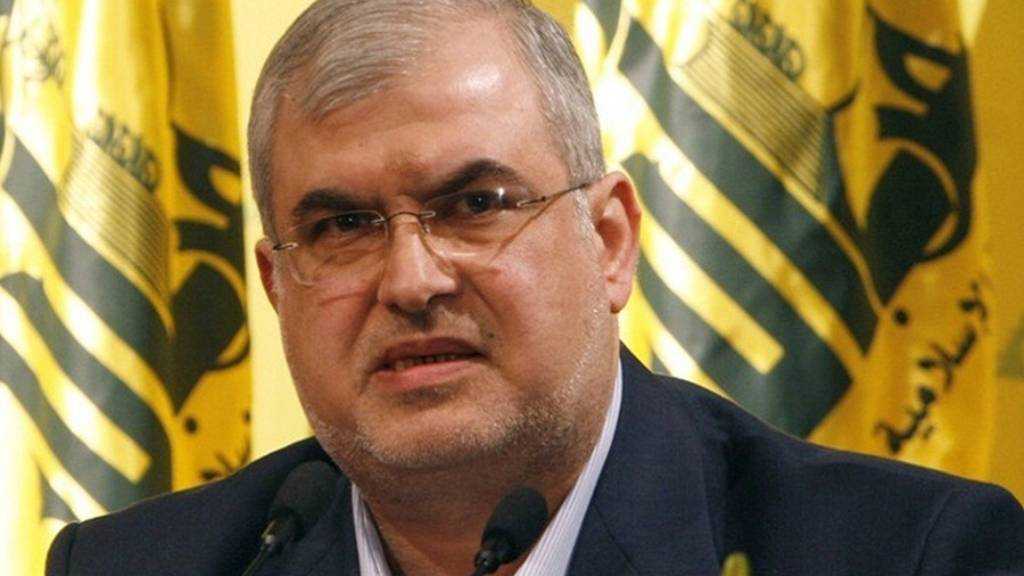
Mohammad Raad*– Al-Akhbar Newspaper
On November 11, 1982, Ahmed Qasir, the heroic martyr who ushered in the era of martyrdom operations, stormed the headquarters of the “Israeli” military governor in Tyre in a car packed with explosives. Through this operation, he heralded the fate of the Zionist occupation of Lebanon and its inevitable end, however long it might take.
As the Resistance fighters’ capabilities evolved, their heroic operations continued, and national spirit was rekindled among different segments of Lebanese society, Ahmed Qasir became a symbol and an example for honorable resistance fighters who sacrifice their lives for Lebanon’s liberation, sovereignty, the freedom of its people and their dignity.
His car, loaded with explosives, made its way towards its designated target: the Zionist aggressor. At the time, there were no security checkpoints operated by the authorities to obstruct the movement of people, whether they were Resistance fighters, collaborators or ordinary citizens.
The blast of martyrdom sent a clear message in flames: there was no place for occupation in Lebanon, and its leaders and forces had to withdraw unconditionally. This was ultimately achieved on May 25, 2000, through the sacrifices of the martyrs, the heroism of the Resistance fighters, the wounds of the injured, the suffering of prisoners and the hardships endured by their community, which comprises the most honorable, the purest and the most dignified of people.
It is deeply regrettable that some Lebanese continued to remain trapped in a narrow, sectarian and factional mindset, entertaining ambitions of monopolizing power in their country, even if that meant relying on the hoped-for support of the Zionist occupiers and their tyrannical American backer. This represents a deeply troubling disregard for their fellow Lebanese, with whom they have no choice but to share responsibility for safeguarding Lebanon’s unity, sovereignty and stability.
Forty-three years after Ahmed Qasir’s martyrdom, following the Al-Aqsa Flood operation and its aftermath, the Zionist enemy has once again returned to repeat its experience of occupying Lebanon, taking advantage of a combination of favorable domestic, regional and international circumstances. It has thrown its full security and military weight behind achieving the very objectives it failed to accomplish during its 1982 invasion and its war of aggression in 2006.
Those committed to the path of the martyr Resistance fighter Ahmed Qasir have neither changed nor abandoned their position. They have continued to uphold their right to prepare, build up their capabilities and accumulate expertise in order to defend their homeland and confront aggression against it, thereby safeguarding the country’s sovereignty and protecting the security and dignity of the Lebanese people.
The car intercepted at a Lebanese security checkpoint in Dahr al-Baidar approximately a month ago was carrying explosives of the kind commonly used in Resistance operations and in defending the homeland against Zionist occupation and its hostile, humiliating objectives for the Lebanese people.
Yet those who failed to learn the lesson of the 1982 invasion, and whose factionalism has once again revived their delusions, rushed recklessly and in a deeply suspicious manner to exploit the incident.
They sought to undermine the Resistance and its role and demonize it, with the aim of helping the occupier and its international and regional backers achieve their objectives. In doing so, they seek to exploit what happened to secure Lebanon a seat aboard the train of subordination and submission to their hostile agendas and interests, which run counter to the interests of Lebanon and its people.
Between Ahmed Qasir’s car and the vehicle intercepted in Dahr al-Baidar lies a long history of events and developments that Lebanon has experienced and continues to experience. These events reflect a struggle between two fundamentally opposing camps in the country, each with its own vision, methodology and assessment of Lebanon’s strategic interests. Each also has its own alliances and presence, first at the popular and official levels, and second at the regional and international levels.
The first is the sovereignty-and-Resistance camp. The other can be described as the opportunistic, compromising camp.
Since the distinction between these two camps is a broad conceptual one rather than a rigid numerical division, various Lebanese figures and groups from different backgrounds and walks of life distance themselves from joining either camp, even though some of them share all or part of the positions and objectives of one camp or the other.
The sovereignty-and-Resistance camp, whose path was inaugurated by the martyr Ahmed Qasir in 1982, is guided by a confident strategic vision: free nations are those whose peoples uphold firm national commitments, from which all state authorities derive their legitimacy and responsibilities. Foremost among these commitments are:
First: National sovereignty, which safeguards the people and the country against any aggression targeting the unity of their land and people, as well as against any foreign interference seeking to impose its policies on the citizens.
Second: Resistance, which citizens embrace as an approach and strategic choice, allowing them to continue preparing and maintaining readiness to confront any aggression targeting their homeland, its territory, people and interests.
As for the opportunistic, compromising camp, it has a presence in the country among certain Lebanese groups and within parts of the state, including some of its security agencies, administrative bodies and institutions. This naturally leads to differences and mutual objections between it and the Resistance camp, which periodically surface in Lebanon’s domestic political life.
It is understood that Lebanon’s national authority is one that derives its legitimacy in accordance with the Constitution and applicable laws, without any form of foreign or external interference, and enjoys the confidence of the majority of the Lebanese people.
The country generally enjoys domestic stability when the government adheres to its adopted ministerial program without maneuvering or resorting to circumvention, and when it does not yield to influential forces and their demands that contravene the provisions of the National Accord, the Constitution and the laws in force.
Since its establishment, Lebanon has never been immune to the influence and interference of various foreign powers acting as external patrons. This has been a major factor behind internal divisions and tensions during many periods of the country’s history.
Perhaps what the Lebanese experienced and endured during the 1982 Zionist invasion, through to the 1989 Taif Agreement, provides a documented account of the clashes among Lebanese themselves over their positions on the Zionist occupation. The opportunistic, compromising camp sought to use that occupation as a means of securing power and influence, relying at times on foreign states and, at other times, on the Zionist enemy itself to impose its authority on the country.
Meanwhile, the sovereignty-and-Resistance camp insisted on liberating every inch of Lebanese territory occupied by the enemy and safeguarding the Lebanese people’s right to govern their own affairs in full independence, free from the dictates and tutelage of any party.
While the Taif Agreement was reached at a moment when international, regional and domestic interests converged, and Lebanese of different political orientations and affiliations subsequently referred to its provisions over the years, today, with the renewed Zionist occupation of Lebanon, we are witnessing deterioration on every level as international, regional and domestic interests collide.
We are also witnessing a deeply troubling disregard for and evasion of both the substance of the Taif Agreement and the Constitution, as the authorities increasingly lean towards complying with the dictates of their international and regional patrons, while awaiting the dust to settle on the ongoing war between the Zionists, their backers and their compromising allies, on one side, and the sovereign Resistance fighters and their allies in Lebanon and the wider region, on the other.
On November 11, Hezbollah Martyrs’ Day, when martyrs stand as the most truthful victors of the cause of justice, one question arises: Is a national understanding that can put things back on the right track still possible?
There is a natural starting point for such an understanding: everyone must acknowledge, first, that coexistence with the Zionist occupation is impossible, and second, that its expansionist threats cannot be accepted. They must then recognize that the Lebanese people’s right to resist is not open to bargaining. The issue of placing all weapons under state control is a matter of sovereignty that should be discussed domestically only after the occupation has ended and within the framework of Lebanon’s national defense and security strategy. There must also be a renewed commitment to the substance of the Taif Agreement, without selectively applying its provisions or manipulating and twisting their interpretation to suit the wishes of one faction or another, or of one foreign patron or another.
The sovereignty-and-Resistance camp and those committed to its principles believe that, following the authorities’ shift towards appeasing the Zionist entity, their conclusion of a humiliating framework agreement intended to reconcile with it and curb its aggression, and the confirmation that relying on any of its provisions is futile, the authorities must reconsider what they have agreed to, correct their course and draw strength from a unified national position in order to shield Lebanon from the dangers of aggression.
In short, the Lebanese people’s firm commitment to the concept of national sovereignty, and to applying it consistently without selectivity, will inevitably lead the country out of the cycle of internal erosion, external plunder and the backroom dealings of those involved in dubious transactions.
* Head of the Loyalty to the Resistance Bloc
Click Here to Read in Arabic