Araghchi: Regional Security Cannot Be Built Through War and Foreign Intervention
By Staff, Agencies
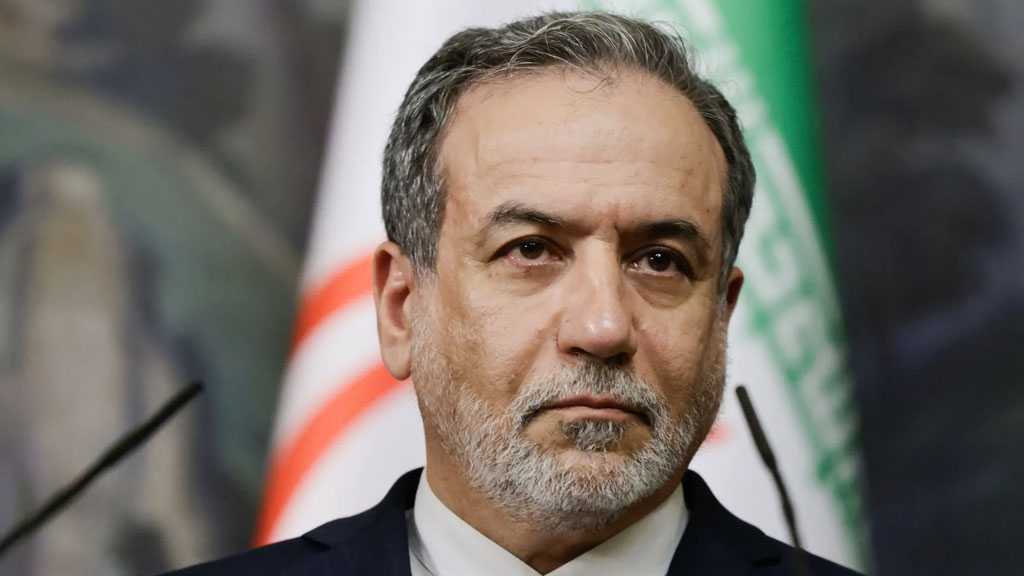
Iranian Foreign Minister Abbas Araghchi has called for a fundamental shift away from militarism and foreign intervention, arguing that military force cannot deliver lasting security and coercion cannot produce genuine peace.
Speaking at the “Calling for a Global U-Turn: Recentering Development, Reclaiming Humanity, Restoring Justice in a Crazi(er) World” conference during the 2026 Global Town Hall hosted by the Foreign Policy Community of Indonesia on Saturday, Araghchi said decades of foreign intervention, military pressure and conflict in West Asia had demonstrated the failure of military approaches to create sustainable stability.
Araghchi pointed to the situation in Gaza and what he described as ongoing crimes by the “Israeli” entity as among the most severe examples of what he characterized as a failed regional security model.
He warned that military force increasingly appears to be treated not as a last resort but as a permanent instrument for reshaping the region’s political and security order. In his view, this has normalized aggression, institutionalized escalation and transformed destruction into an instrument for pursuing political objectives.
Addressing the recent US and “Israeli” military action against Iran, Araghchi described the attacks as illegal, unjust and aggressive and said they had taken place without prior provocation. He also cited what he described as targeted assassination campaigns against Iranian officials, threats against political figures and violations of national sovereignty.
Araghchi warned that continued failure by the international community to respond effectively to such actions could gradually weaken the limits imposed by international law.
He also referred to the killing of 168 students in an attack on a school in Minab, southern Iran, emphasizing that the victims should not be reduced to statistics. Each death, he said, represented a family, a future and an individual life, asking: “When do we say enough is enough?”
The Iranian foreign minister argued that international law cannot remain credible if it is disregarded when major powers' interests are involved. He similarly said human rights cannot genuinely be described as universal if they are treated as fundamental rights for some countries but conditional privileges for others.
Rather than abandoning multilateralism, Araghchi called for what he described as genuine, effective and fair multilateralism, accompanied by a broader transformation in international affairs.
He urged a shift from militarism toward sustainable development, from interventionism toward respect for national sovereignty, from collective punishment toward civilian protection and from selective accountability toward universal justice and lasting peace.
Araghchi also stressed that security in West Asia should not be imposed from outside the region. He argued that regional countries themselves should determine their approach to security, stability, development and their shared future through dialogue and cooperation.
According to Araghchi, sustainable regional security can be achieved through confidence-building, dialogue, mutual respect and cooperation among neighboring states rather than through the military presence of foreign powers or attempts to impose external political choices.
He concluded by portraying the international community as facing a historic choice: continue along a path of militarism, intervention and recurring conflict, or move toward development, human dignity, justice and respect for international law.
“The time for this is not tomorrow or some indefinite future; the time is now,” Araghchi said.
Comments