America Rejects Trump’s Wars: A Warning to Washington and the “Israeli” Lobby
By Mohamad Hammoud
The midterm elections delivered a powerful rebuke to Trump’s presidency, exposing growing American opposition to foreign wars, unconditional support for “Israel,” and the political influence of AIPAC.
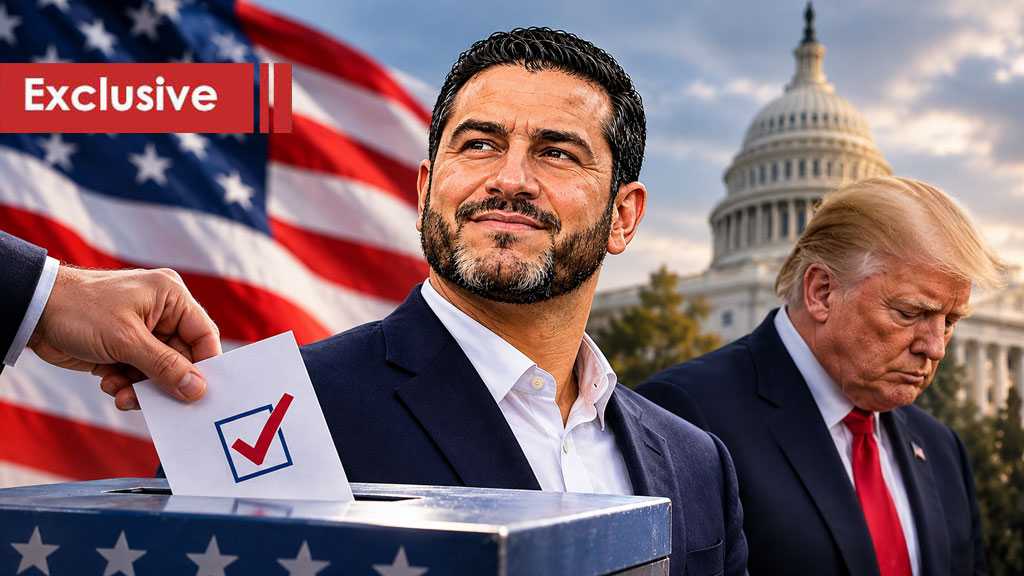
Donald Trump urged Americans to vote in the November 3 midterm elections as though he were personally on the ballot, telling supporters to “pretend I’m on the ballot.” Voters responded by rejecting his Republican Party and delivering a warning extending far beyond domestic politics. From rising living costs to Washington’s war against Iran and unconditional support for “Israel,” the results exposed growing dissatisfaction with policies whose consequences increasingly reach American households.
The voters’ message was unmistakable: Americans spoke loudly, declaring they would no longer tolerate a president who promised prosperity and an end to unnecessary wars but delivered economic uncertainty, military confrontation, and international instability.
A Political Earthquake in Washington
According to the Associated Press, Democrats captured both the House of Representatives and Senate, flipping Republican-held seats, including victories in traditionally conservative states. They also gained House districts Trump carried comfortably in 2024.
These victories threaten to transform Trump into a lame-duck president halfway through his second term. Democratic congressional majorities can obstruct legislation, investigate presidential decisions, challenge military expenditures, and demand accountability for foreign policy. Trump is not powerless, but his ability to govern without congressional resistance has sharply diminished.
Michigan: Defeating AIPAC’s Political Machine
Michigan delivered one of the election’s most consequential messages. Democrat Abdul El-Sayed defeated Republican Mike Rogers despite millions spent by pro-“Israeli” organizations and efforts by Trump and other prominent supporters of “Israel” to sway voters. Michigan rejected Trump and AIPAC, electing the first Muslim to the United States Senate.
The message was clear: AIPAC’s good days may be over, and financial power cannot always overcome growing opposition to unconditional American support for “Israel.” Even Rogers, a staunch supporter of “Israel,” reportedly asked AIPAC to avoid advertising on his behalf, fearing its involvement could become an electoral liability.
AIPAC itself recognized its growing political liability. Therefore, in October, it announced plans to discontinue direct candidate endorsements and contributions through its political action committee. Previously, candidates proudly advertised AIPAC’s support; now, some supporters of “Israel” reject its money. Nevertheless, its affiliated super PAC remains active, meaning its financial influence has not disappeared.
Trump’s Retreat on “Israel”
Perhaps the clearest acknowledgment came from Trump himself. On Election Day, he astonished many by announcing plans to terminate approximately $4 billion in annual American military assistance to “Israel” by the end of 2026, arguing that the country could finance its own weapons purchases.
However, Trump’s announcement was not simply about reducing military expenditures. It also reflected the growing domestic political pressure surrounding Washington’s unconditional support for “Israel.” Significantly, Trump explicitly cited El-Sayed, whose electoral success demonstrated the changing political landscape. His remarks exposed a remarkable contradiction: a president who had long defended extensive military cooperation with “Israel” was now acknowledging the domestic political costs of that relationship.
Whether this sudden shift represents genuine policy reconsideration or electoral damage control remains uncertain. Nevertheless, the announcement challenges Washington’s longstanding assumption that unconditional support for “Israel” carries little domestic political risk.
A Warning Beyond Washington
For “Israel,” this election represents more than a political setback for Trump. It signals a growing challenge to the privileged relationship “Israel” has enjoyed with Washington for decades. In many ways, the election also became a referendum on a fundamental question: America First or “Israel” First? Increasingly, American voters appear unwilling to accept policies that place “Israeli” interests ahead of their own.
After years of witnessing “Israeli” atrocities and the genocide against Palestinians, more Americans are questioning why their tax dollars continue financing a military responsible for such violations. Their frustration has only deepened as they struggle with rising living costs and economic uncertainty at home. At the ballot box, that anger found political expression, sending a warning to elected officials that Americans are no longer willing to sacrifice their economic well-being to sustain Washington’s unconditional support for “Israel.”
This growing opposition threatens to weaken “Israel’s” longstanding influence in Washington. With Democrats controlling Congress, lawmakers could scrutinize military assistance, investigate the Iran war, and resist further escalation.
Trump requested a referendum on his presidency. Americans delivered one, with a broader warning: America First, not “Israel” First. Whether Washington heeds that message may determine the future direction of US foreign policy.