The Soil Underfoot: Has “Israel” Brought Biological Tracking to Lebanon?
By Mohamad Hammoud
The most invasive revolution in targeted surveillance no longer relies solely on hovering drones, satellite tracking, or compromised cellphones- it may now operate directly beneath our feet, supplementing traditional reconnaissance with biological tracking.
Evidence published in the peer-reviewed scientific journal PLOS ONE demonstrated that environmental soil bacteria can be genetically modified, returned to native soil, and later detected as biological markers. In a joint US-“Israeli” research project involving “Israeli” defense bodies and American scientific institutions, researchers engineered native soil bacteria to function as detectable biological tags.
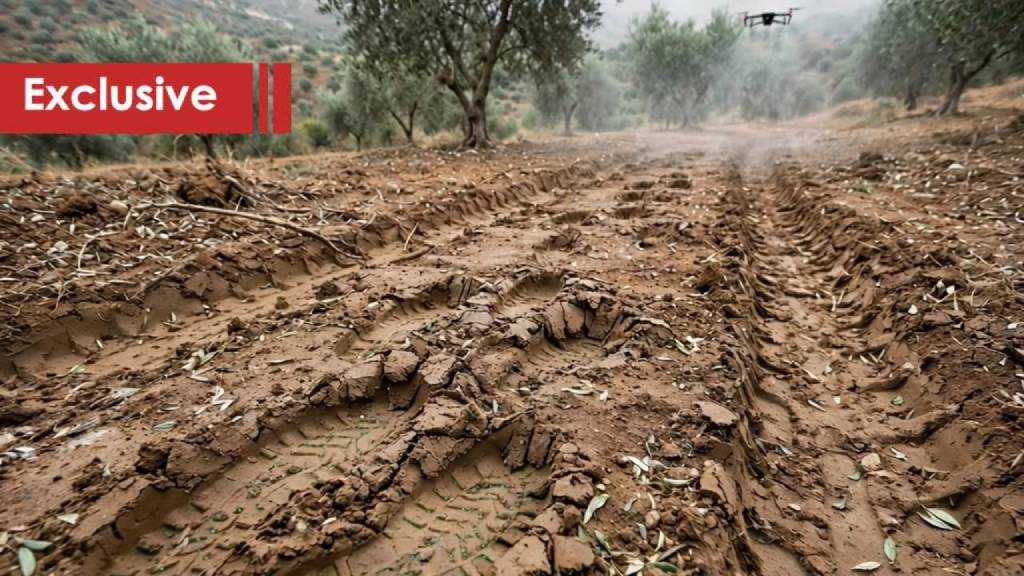
To demonstrate how such biological markers could work in practice, researchers engineered strains such as Bacillus frigoritolerans to express distinct fluorescent signals visible to optical sensors. Crucially, the study showed that mud containing these modified microbes can transfer onto clothing, footwear, or vehicle tires, allowing the biological marker to travel with a person or vehicle. Once transferred, the marker could be detected by optical sensors, including those mounted on unmanned aerial vehicles [UAVs]-effectively turning the ground itself into part of a tracking system.
Pattern of Environmental Dispersal in Southern Lebanon
For years, residents across southern Lebanon have reported low-altitude aerial spraying that systematically alters local border ecosystems- concerns reinforced by Human Rights Watch, which documented that “Israel” repeatedly dropped toxic white phosphorus and heavy chemical agents over populated Lebanese border municipalities, including Yohmor, Aita al-Shaab, and Ras Naqoura. Additionally, United Nations reports confirmed that extensive chemical clearing operations by “Israeli” forces destroyed local agricultural cover along the Blue Line.
Together, these practices establish a pattern of dispersing substances over southern Lebanese land and raise a more troubling possibility: engineered biological markers could be deployed across the same terrain, providing another means of tracking movement on the ground.
Unexplained Targeting and Signal Vacuums
Throughout recent escalations, “Israel” repeatedly targeted specific individuals traveling in vehicles, entering buildings, or moving through rural areas of Lebanon. Electronic surveillance may explain some of these strikes, but Hezbollah deliberately reduced its electronic footprint by restricting cellphone use and shifting toward offline communications. Yet the targeting continued, raising questions about what other surveillance methods may have been employed.
The pager attack adds another dimension. Its significance here is not technological sophistication, but the willingness to conduct an operation that claimed lives and injured civilians alongside its intended targets. That disregard for civilian life provides important context when considering whether other unconventional methods could have been deployed. Biological ground tagging offers one such possibility: individuals passing through treated soil could unknowingly carry invisible markers on their clothing, footwear, or vehicles, allowing those markers to be detected without relying on a cellphone or another conventional electronic signal.
Historical Impunity and Deceptive Tactics
That possibility must also be considered against a broader record of unconventional tactics affecting civilians. In Gaza, Euro-Med Human Rights Monitor documented testimony that “Israeli” quadcopters played recordings of crying babies and women screaming, prompting residents to emerge before they were fired upon. In Lebanon, Human Rights Watch has documented the unlawful use of airburst white phosphorus over populated areas.
These incidents reinforce the concern already raised by the pager attack: when military objectives are pursued despite foreseeable civilian harm, unconventional methods cannot simply be dismissed because their use would violate accepted norms. That history is relevant when asking whether emerging biological surveillance technology may also have moved beyond the laboratory.
Outside the Biological Weapons Convention
The question becomes more significant because “Israel” remains outside the 1972 Biological Weapons Convention. As of 2026, “Israel” is one of only four states that have neither signed nor acceded to the treaty.
That status does not answer what happened in Lebanon, but it removes another source of reassurance. When a state involved in developing dual-use biological technology remains outside one of the world’s principal biological-weapons treaties, questions about how that technology might ultimately be used deserve independent scrutiny.
Conclusion
An entity that has repeatedly violated international law, killed thousands of civilians, and devastated communities in Gaza and southern Lebanon cannot simply be given the benefit of the doubt when questions arise about another dangerous method of warfare and surveillance.
The Lebanese government must therefore conduct independent laboratory testing of soil, water, and vegetation from areas subjected to “Israeli” spraying and military activity. If engineered biological markers are found, Lebanon must document the evidence and bring it before the international community- adding another atrocity to the long record of “Israeli” violations of human rights and international law.